Vidovdan at the Holy Monastery of Hilandar

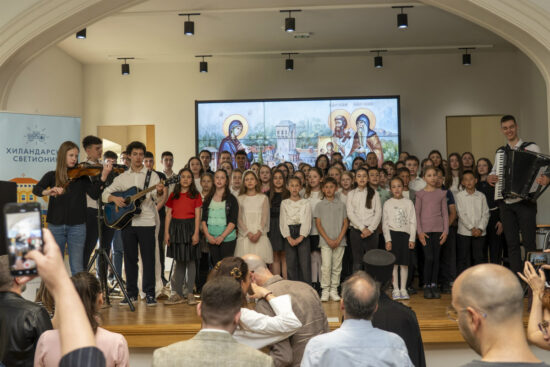
On the Feast of “Vidovdan”, solemnly and prayerfully celebrated at the Holy Monastery of Hilandar, the feast of St. Great Martyr Prince Lazar and the Holy Martyrs of Kosovo took place. St. Prince Lazar is celebrated as the benefactor of Hilandar because, in 1380, he built an external narthex on the existing main church of St. King Milutin.
The service began with an all-night vigil and concluded with the Holy Liturgy, followed by a festive meal. During the liturgy, two koljiva (memorial wheat dishes) are consecrated: one for the feast and another for the parastos (memorial service) for all the Kosovo heroes of 1389, served before the evening service on the feast day.
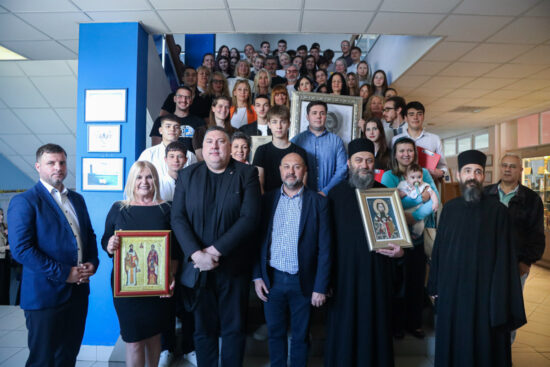
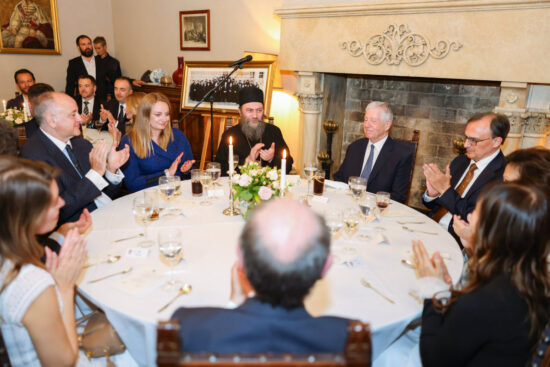
The monastery brotherhood had the honor of hosting Nenad Popović, the Minister without Portfolio responsible for international economic cooperation and the social position of the church in the country and abroad, as the guest of honor for the feast day.
For the twelfth consecutive year, the Vidovdan celebration at Hilandar was filled with an additional emotional and festive atmosphere, thanks to the members of the society “Guardians of Christ’s Tomb” from Batajnica.
This tradition has been nurtured in the village of Vrlika, 30 km south of Knin. Guarding Christ’s Tomb is an ancient custom observed only in Jerusalem and in Vrlika, a small place in North Dalmatia between the Dinaric Alps and Svilaja Mountain. Exact records of the origins of this custom are not found in historical sources, but according to oral tradition, the custom has existed for at least 400 years. This long tradition is woven into the Orthodox custom, which was most likely brought to Vrlika from Jerusalem itself. The guardians enter the church dressed in the traditional attire of the mentioned region, led by the harambaša (leader), where two guards take their positions north and south of Christ’s Tomb. Guard shifts are frequent, and the guards move through the church unobtrusively, maintaining steadfast piety. Their movements are not synchronized with those of the priests. This custom stems from genuine folk piety and does not disrupt the harmony of the church service; rather, it enhances the Liturgy with elements of warrior dignity.
Photo: Monk Milutin Hilandarac